
Three Ways OEMs Overspend on Sheet Metal Fabrication (& What Our Estimators Catch First)
OEMs are under cost pressure from every direction right now. Supply chains are still sorting themselves out, material costs have been volatile, and the margin between a competitive bid and a losing one keeps getting thinner. So when fabrication costs come in higher than expected, the instinct is usually to look at material prices or shop rates. However, there can be additional and more effective places to look. In our experience, the biggest drivers of unnecessary fabrication cost aren't market forces. They're design and sourcing decisions that got locked in before production started. Our estimators and engineers regularly catch these problems during quoting and pre-production phases. Here are the three we see most often.
1. Parts Designed Without the Production Process in Mind
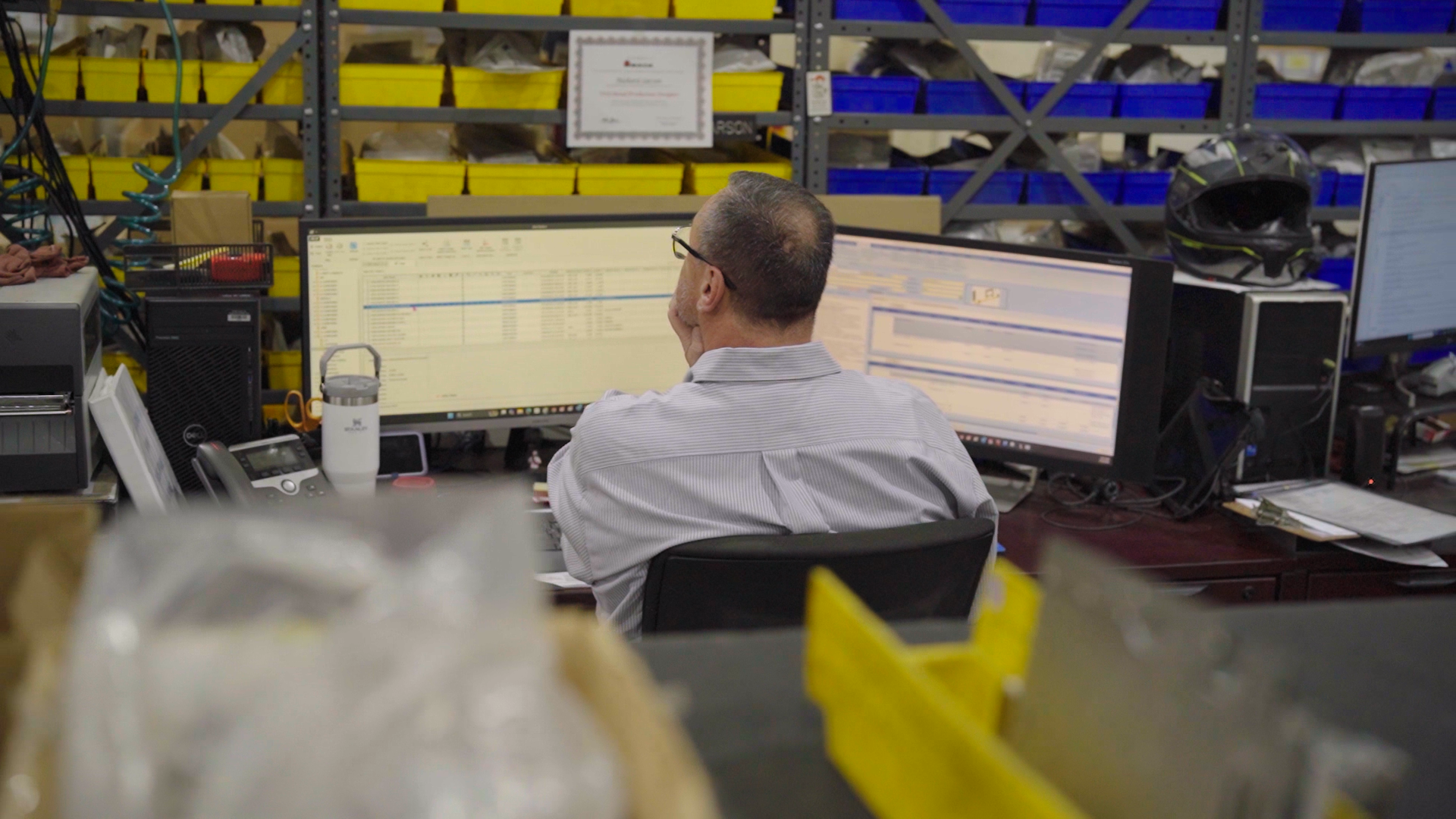
A print arrives that looks clean. The geometry is well-defined, dimensions are clear, and intent is obvious. Unless you've spent time on a production floor, what often isn’t obvious is a particular bend radius that requires additional tooling setup, a hole placement that will cause deformation during forming, or a specialized surface finish specified for a feature that doesn't functionally need it.
These aren't design errors in the traditional sense. The part will work. It just costs more to make than it should. A lot of this comes down to how engineers are trained. Tolerancing and design conventions taught in school are built around machining. Sheet metal is a different animal entirely. When you're forming parts rather than cutting from a block, decisions that look straightforward on a screen can create real complications on the production floor.
Design for Manufacturability (DFM) is the process of reviewing those decisions before they become production realities. We apply it during the quote stage instead of after the order is placed. Our estimators and engineers work together on incoming prints, evaluating them for characteristics that will add cost without adding value and flagging them before the quote goes out. Account managers are in that loop too, because the earlier we understand what a part is actually doing in the end product, the better the decisions we can make on the front end.
As Bob Loder, our Estimating Manager, put it, "We want to be a partner instead of just a vendor. We can get our engineers to know their engineers one-on-one, and the back and forth just works well."
The underlying principle here is what manufacturing professionals call the Rule of 10: the cost of correcting a design problem multiplies at each stage of the value stream. Catching something at the quote stage costs nearly nothing. Catching it after tooling has been built and a first article has been rejected costs significantly more. We'd rather have the conversation early.
When we identify something, we include it in our quote response and ask whether the specification is firm. Often the OEM's engineering team didn't realize the call had that implication, and a minor drawing revision solves it. Sometimes the specification is firm for a functional reason, and we account for it. Either way, you know what you're buying and why it costs what it costs.
2. Tolerances Specified Tighter Than the Application Actually Needs
This one is easy to overlook because tight tolerances read as quality. An OEM specifying ±0.001" is being careful, right?
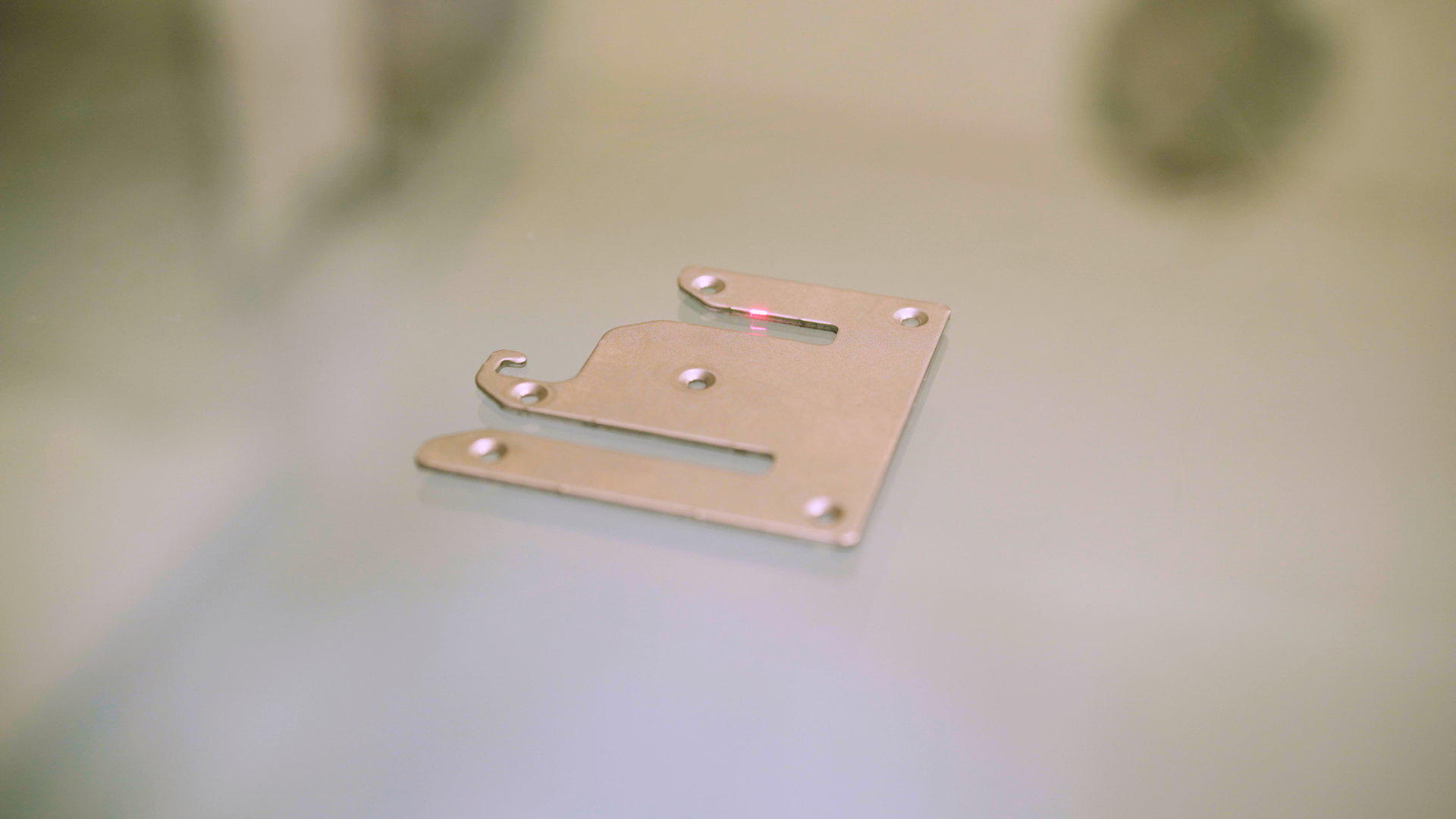
Sometimes. Often, though, a tolerance that precise is being applied to a feature where ±0.005" would perform identically in service, which results in a pretty big cost difference. Tighter tolerances mean slower cycle times, more inspection steps, and sometimes a different process entirely than the part's geometry would otherwise require.
This is another place where the difference between machining training and sheet metal reality shows up. Bob explained, "A lot of engineers, myself included, when they come right out of college, everything's designed as a machined item. Sheet metal is a whole different animal. When you're forming things, tolerances stack up. If you have multiple bends, you need more tolerance. And people don't consider that when they're creating their drawings. They just go with the standard machining tolerances that everybody's been taught, and it's very difficult, if not impossible, to hold a lot of those."
Our laser centers hold ±0.0019", and our turret punch presses hold ±0.0040". Both are accurate, reliable processes. But not every part needs laser-cut precision, and quoting a part to laser standards when turret punching is the right fit for the geometry adds cost the OEM absorbs for no functional gain.
When a print calls for a tolerance that exceeds what the application requires, we note it in the quote and proactively ask for approval. We also send a general tolerance letter with quotes when we can't meet print specifications, so customers can review exactly what we can hold and make an informed decision before committing. On high-volume runs, getting process selection right from the start compounds savings across the life of a program.
The goal is to educate customers. As Bob said, "We have to educate customers a lot on how sheet metal practices compare to other types of manufacturing. We can usually do something, but if you have to make fixtures or machine a part after it's already been bent up, it gets really costly."
3. Splitting Work Across Multiple Vendors When One Facility Can Run the Full Sequence
An OEM's fabrication program might cut raw blanks at one shop, bend at a second, insert hardware at a third, and finish it at a fourth. Each vendor is competent and has an established relationship, but the total cost, timeline, and accountability picture are more complicated than they need to be.
Every handoff between vendors adds freight, scheduling dependency, and a new opportunity for a nonconformance to travel downstream. When a part arrives at vendor four with a problem, the investigation starts at vendor one, and it's rarely fast or clean.
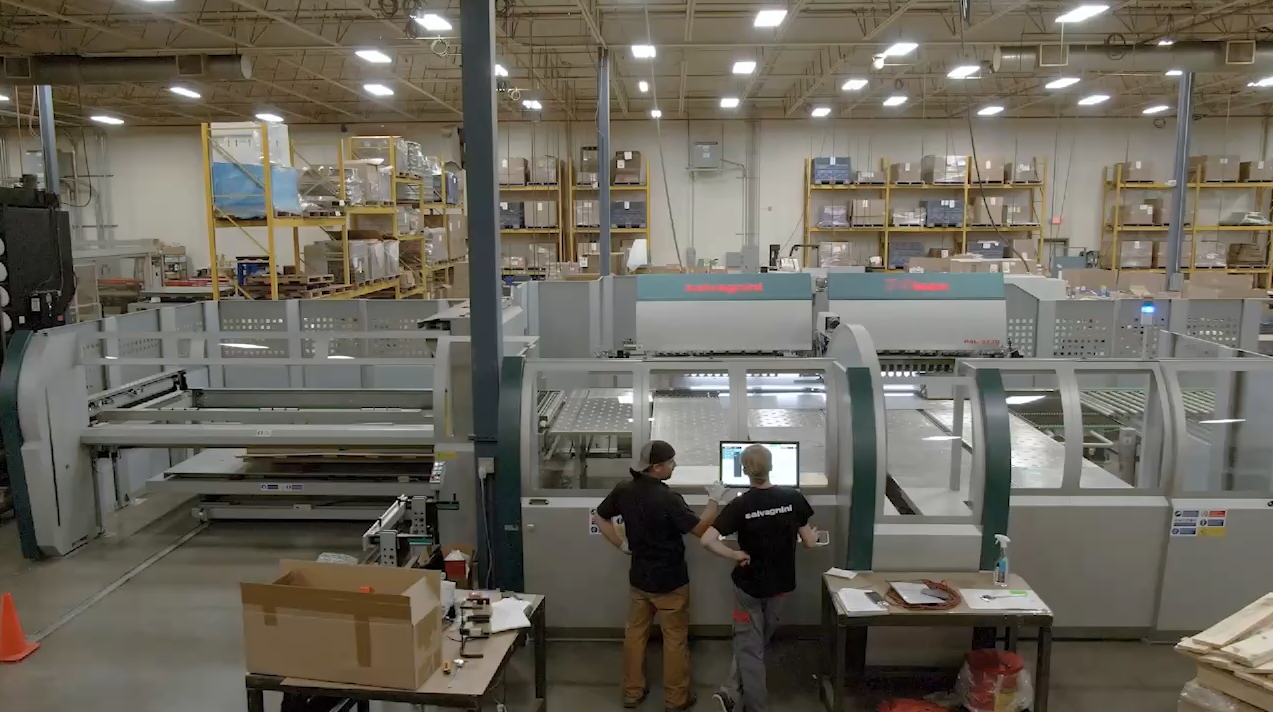
Our facility in White Bear Township spans 110,000 square feet. It handles the full fabrication sequence under one roof, including laser cutting, turret punching, press-brake forming, panel bending, hardware insertion, welding, machining, deburring, and CMM inspection. A part that comes in as raw material can leave as a completed, inspected assembly without leaving the building. For finishing (plating and painting being the most common), we work with a set of long-term vendor partners we trust and send consistent volume to. Those relationships matter for pricing, scheduling, and quality accountability.
When operations run in sequence at a single facility, lead times compress, quality handoffs are internal rather than external, and the people responsible for each stage of your program are in the same building. Your account manager doesn't have to call three shops to tell you where your job is.
For OEMs running programs with multiple fabrication operations, consolidating that work isn't always possible. Sometimes specialized vendors are the right call for a specific process. But it's worth asking. The administrative overhead and logistics costs of managing a fragmented vendor base for a program that a single-facility shop can handle end-to-end add up, and they rarely show up as a line item anyone reviews.
The Earlier We See It, the Less It Costs You
All three of these cost drivers are often visible early and much cheaper to address at the quote stage than at any point after production starts. That's why our estimating and engineering team, with several hundred years of combined experience across sheet metal fabrication and manufacturing, works together on incoming prints rather than treating quoting as a purely administrative function.
If you have a current program where costs have come in higher than expected, or a new project you'd like a second set of eyes on before you finalize the design, we're glad to take a look. Our estimating team can turn around a DFM review as part of the quoting process. Request a quote to get started.
