
The Logic Behind HPM's Press Brake Fleet: Matching Tonnage & Bed Length to Every Job
When engineers come to HPM with a new program, they rarely ask which press brake will run their parts. That decision happens on our end, and it's one of the most consequential routing choices we make. The wrong machine produces scrap, strains tooling, and forces rework. The right one closes a part cleanly on the first hit.
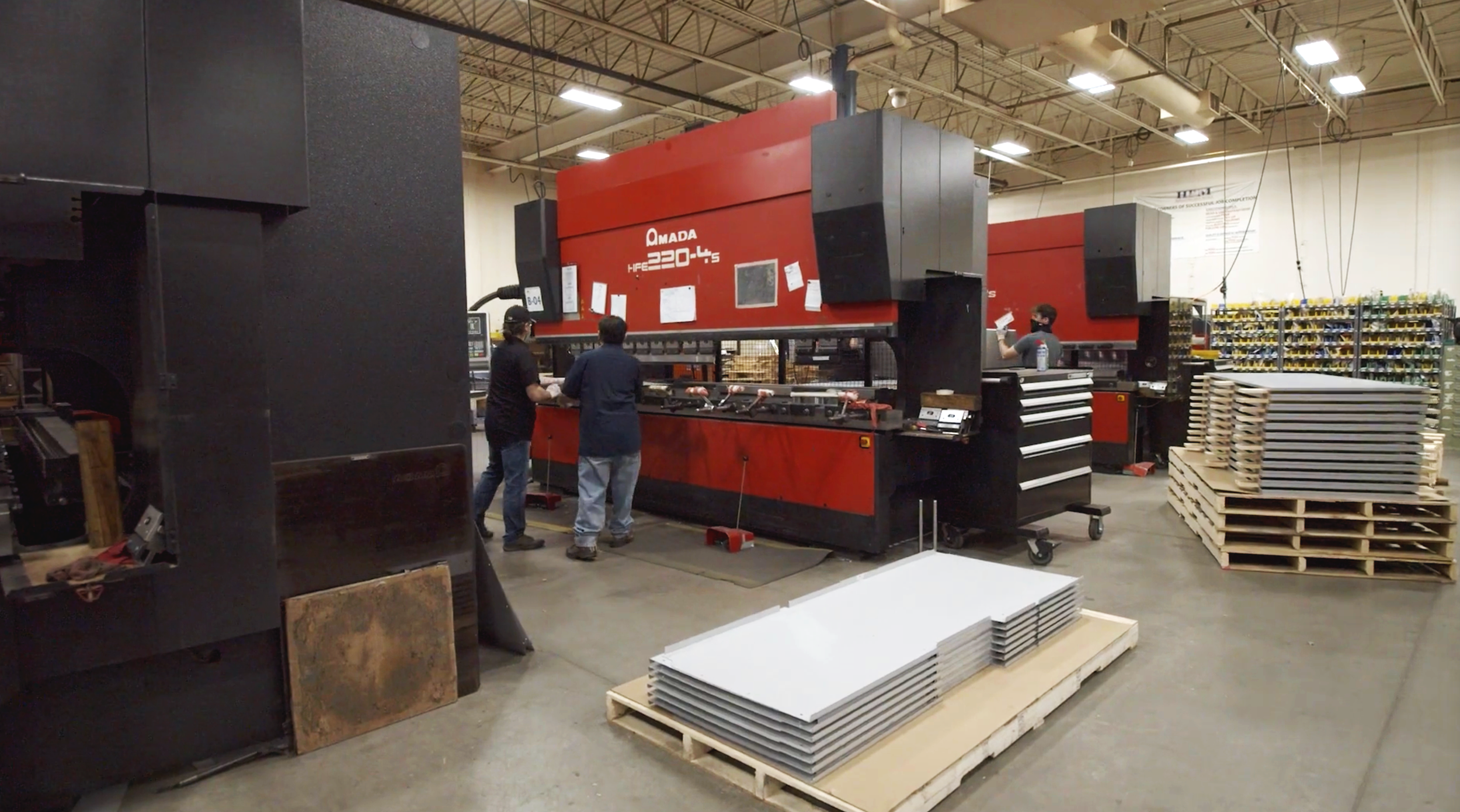
Our press brake forming capabilities span more than 20 machines, with bed lengths from 4 feet to 14 feet and tonnage from 40 to 240 tons. That range helps us serve a diverse customer base across electronics, data center, medical, and energy storage, meaning handling parts that have almost nothing in common with each other. A 14-gauge chassis bracket and a quarter-inch structural panel are both sheet-metal bends, but they require different machines, tooling, and approaches.
Why Tonnage and Bed Length Both Matter
Press brakes are rated by tonnage and bed length. Tonnage is the total bending force the machine can generate, and bed length determines the longest part it can form in a single pass.
Tonnage requirements scale with material thickness, material type, and bend length. Thicker stock requires more force; longer bends require more force distributed across a wider span. What many specs don't account for is the relationship between those two variables at the machine level. A press brake's tonnage rating assumes load is distributed across a substantial portion of the bed. When a short part is centered on a large machine, the concentrated load at that point of contact can exceed what the bed and tooling are designed to handle locally, even if the total tonnage looks comfortable on paper. A part requiring 50 tons of force, run on a 200-ton machine over a 4-inch span, can split the punch before the bend is complete.
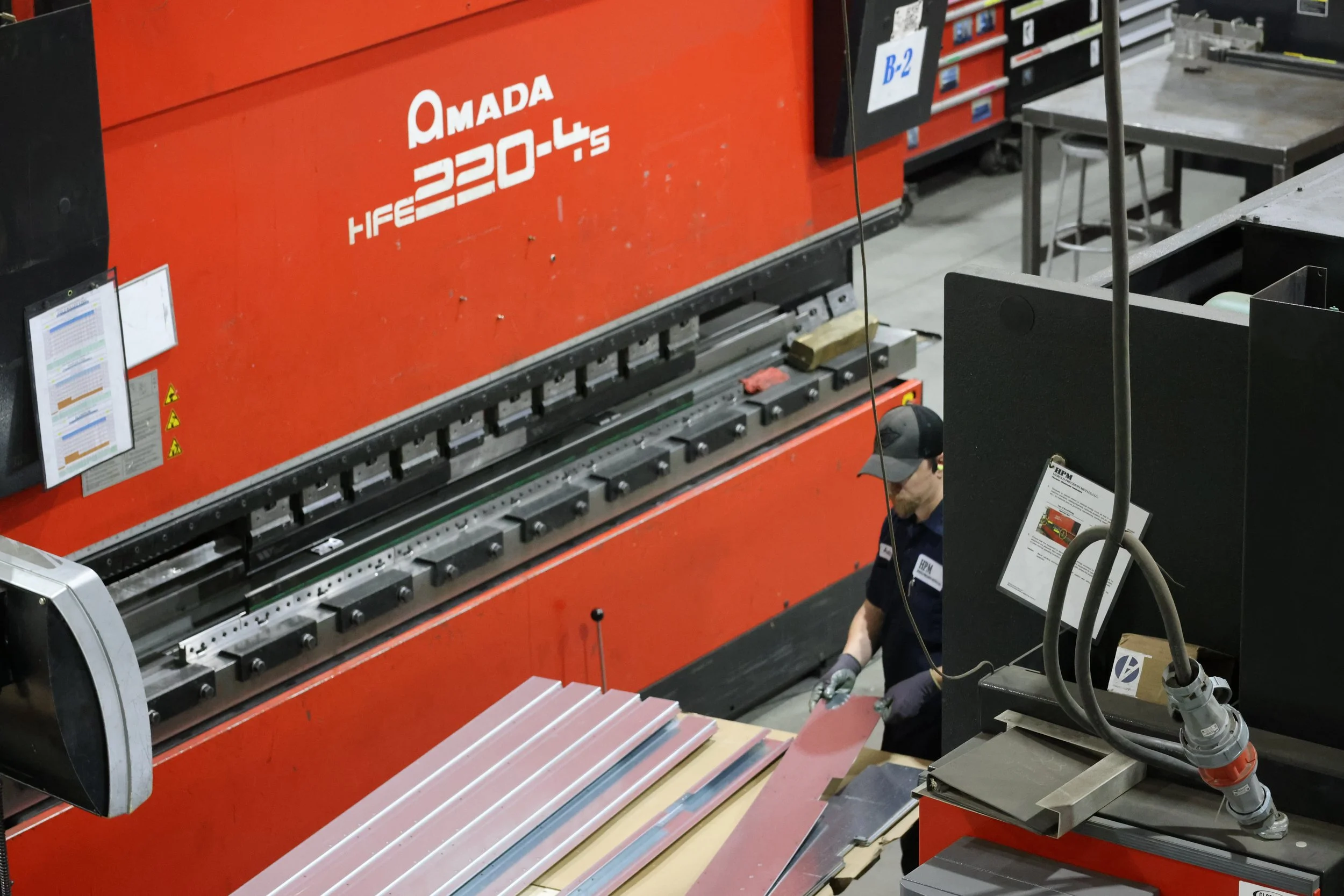
This is the practical reason a shop serving high-mix work needs machines sized across a full range. Our 4-foot, 40-ton Amada EG4010s exist for small parts where both the tonnage requirement and the part geometry call for a compact machine. Running that same part on one of our 14-foot Amada HFE 2204S units at 240 tons would be the wrong call, regardless of the available capacity.
How the Fleet Covers the Full Range
Our machines group naturally by application.
At the lighter end, the 4-foot EG4010s handle small brackets, covers, and detail parts where bed utilization on a larger machine would create load concentration issues. The 6-foot, 60-ton RG5020LD units step up for medium-depth flanges and parts that need a slightly longer forming window without heavy material demands.
The 8-foot and 10-foot machines cover the broadest share of what runs through our shop. Our Amada HDS 1303s, HG 1303s, and HFE 1003S units in the 100- to 130-ton range handle mid-gauge steel and stainless across a wide variety of enclosure, panel, and bracket geometries. These machines absorb the majority of standard production work.
At the top of the range, our 14-foot Amada HFE 2204S machines, with up to 240 tons of capacity, are built for long parts and heavy stock. Closing a 14-foot panel in a single pass, or forming quarter-inch steel, requires both the bed length to support the part fully and the tonnage to overcome the material's resistance without deflection. Our HFE 1704S at 220 tons fills the step between, for programs where the material is heavy but the part length falls short of the full 14-foot window.
ATC Machines and What They Change for High-Mix Work
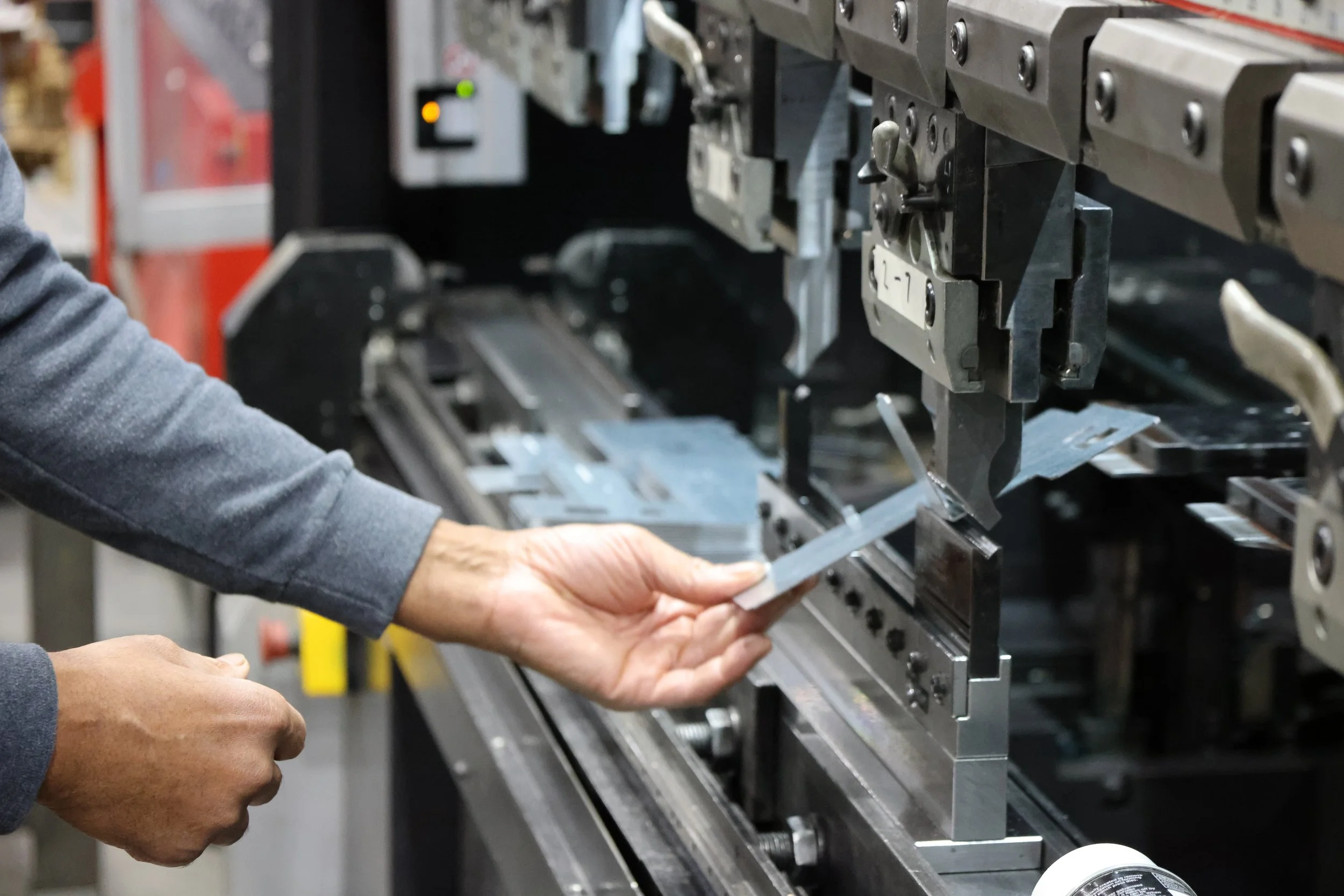
Two of our press brakes carry Amada's Automatic Tool Changer: a pair of 1003 ATC units at 10 feet and 110 tons. These machines change the economics of short-run work for customers running high-mix programs.
Manual press brake setup, on a conventional machine with a complex tool layout, takes 30 to 40 minutes. The ATC performs the same configuration in 3 minutes or less. On a program with 15 different part numbers in a single release, manual setup time compounds into a lead time problem. With ATC, the machine stays productive across the changeover, and rush jobs can be introduced without displacing a full setup cycle on an adjacent machine.
This matters most for customers in early-stage programs or those running NPI alongside production. The parts are changing, lot sizes are small, and the cost of setup time as a percentage of total run time is high. ATC tooling technology is what makes those programs viable without penalizing cycle times elsewhere.
Where DFM and Offline Programming Fit In
Machine routing is only part of what determines whether a forming program runs cleanly. The other part happens before a part is cut.
Our engineering team reviews forming requirements during DFM consultation and uses offline simulation to verify bend sequences and tooling before any material is touched. This step catches the problems that are expensive to discover at the machine. Some examples might be a flange too short to seat properly in the backgauge, a bend sequence that creates a collision with the tooling, or a tight-radius requirement that calls for tooling not in the standard setup.
Offline programming also connects directly to machine selection. A bend simulation that runs cleanly on paper may reveal that the part geometry is only achievable on machines with specific open-height clearance or a particular backgauge axis configuration. Knowing that before the job is scheduled means it routes to the right machine from the start rather than being redirected after a failed first article.
For programs moving from prototype to production, that early engineering engagement is what prevents re-sourcing. The part was designed with HPM's fleet in mind, the simulation validated the approach, and production runs on the same process the prototype proved out.
Matching the Machine to the Job
When a job comes through our floor, the routing decision accounts for the part's bend length, the material's thickness and type, the required inside radius, and the lot size. A part that fits on six machines isn't automatically routed to the most available one. The goal is to match the bend's physics to a machine that handles it without approaching load limits, using tooling already configured for that work.
That routing discipline is what makes fleet diversity worth having. Twenty-plus press brakes covering the full range of tonnage and bed lengths mean we're selecting the right machine rather than the nearest available one. The result is tighter consistency across production runs, lower scrap rates on difficult materials, and programs that don't create surprises when volume scales.
For parts that sit outside the press brake envelope entirely, whether due to complex multi-bend geometries or high-volume requirements, our Salvagnini P4 panel bender extends what we can offer within the same facility.
Ready to talk through the forming requirements on your next program? Explore our press brake capabilities or request a quote to connect with our engineering team.
Frequently Asked Questions
-
We routinely form steel, stainless steel, and aluminum and can accommodate heavier material thicknesses upon request.
-
Our largest press brakes have 14-foot beds, allowing us to form parts up to 14 feet in a single pass without repositioning.
-
Yes. We operate two Amada 1003 ATC press brakes with automated tool changing. These machines are particularly well suited to high-mix programs and short-run work where setup time is a throughput constraint.n text goes here
-
Yes. Our engineering team provides DFM review and offline bend simulation as part of our standard pre-production process. Early involvement typically reduces lead time and avoids forming issues that are more costly to resolve after production begins.
