Electronics Fail When the Enclosure Design Does
The circuit boards, sensors, and processors inside your product may be engineered to exacting standards, but they're only as reliable as the enclosure surrounding them.
Field failures and warranty claims consistently confirm this. Electronic components perform exactly as designed until the enclosure lets in moisture, fails to manage heat, transmits vibration, or leaves the board exposed to electromagnetic interference. At that point, the quality of the electronics inside doesn't matter much.
We see this often when enclosure projects come to us. Some arrive early, when our engineers can shape the design from the ground up. Others arrive after a prototype has failed or after a product has shipped, and returns are starting to pile up. The earlier we get involved, the better the outcome. Every time.
Design for Manufacturability (DFM) in the context of custom electronic enclosures means engineering a part that actually does its job and protects sensitive electronics over years of real-world use, while keeping production efficient and costs predictable.
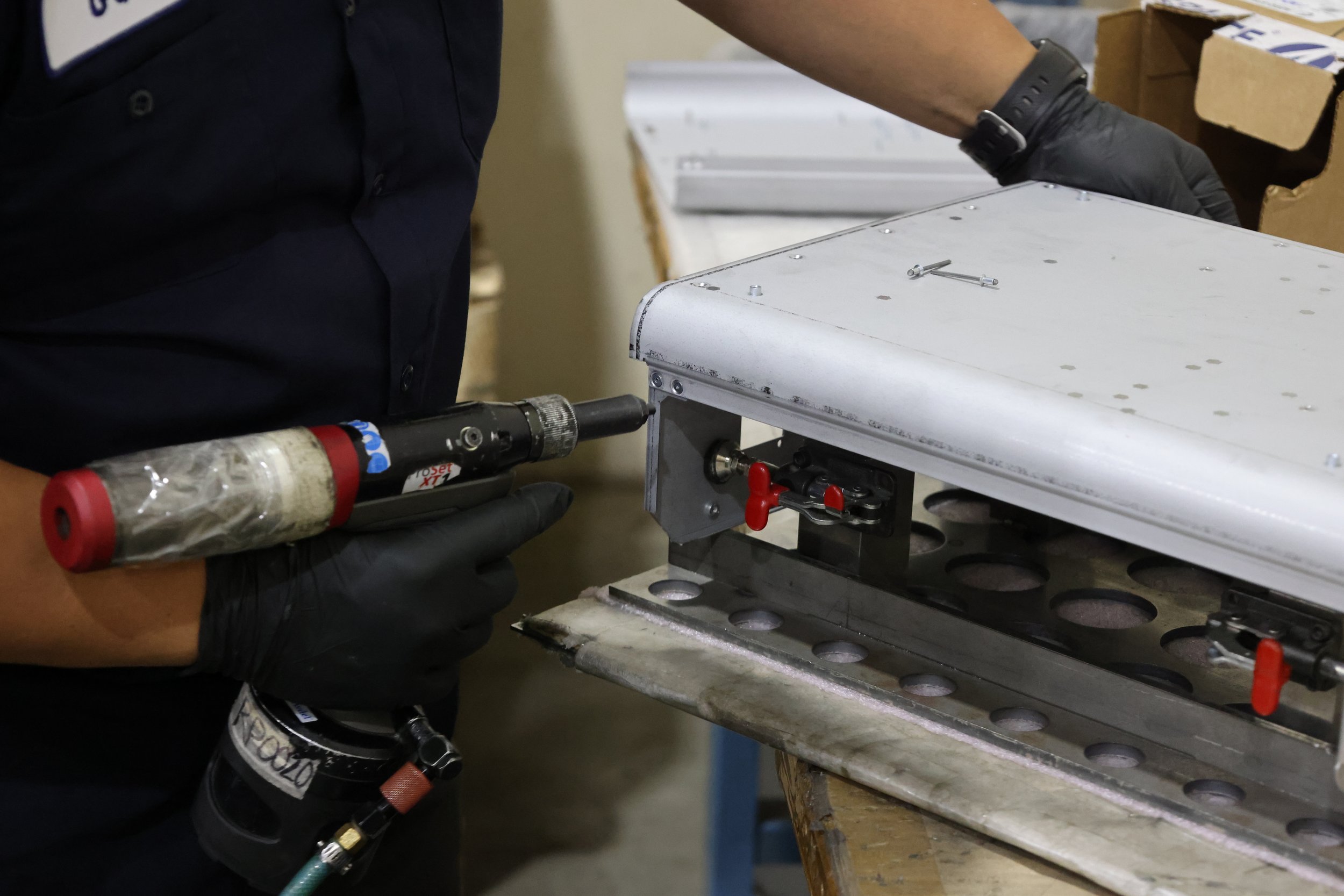
The Threats a Metal Enclosure Has to Handle
Before getting into design decisions, it's worth clarifying what a metal enclosure is meant to defend against. In most electronic applications, there are five primary threats.
Moisture and contamination: Whether it's condensation in a climate-controlled facility, rain exposure in an outdoor deployment, or wash-down cycles in a food processing environment, moisture finds its way in. It corrodes contacts, bridges unintended circuits, and degrades insulation over time.
Mechanical shock and vibration: Equipment mounted in vehicles, industrial machinery, or other environments subject to routine handling will experience vibration loads that standard off-the-shelf enclosures may not be rated to withstand. Poorly designed mounting points and inadequate panel stiffness send a shock directly to internal components.
Thermal stress: Electronics generate heat. Heat has to go somewhere. An enclosure that traps it accelerates component aging, increases failure rates, and can create safety concerns. Managing heat through material selection, vent placement, and airflow strategy is an engineering problem that must be addressed at the design stage.
EMI and EMC: Electromagnetic interference affects both emissions and immunity. An enclosure that doesn't control signal leakage may fail FCC or CE compliance testing. One that doesn't shield internal electronics from external interference can produce operational problems in the field that are notoriously difficult to diagnose.
Physical impact: Drops, contact with tools or equipment, and general environmental abuse require structural integrity that goes beyond choosing a material and bending it to shape.
Each of these threats demands a specific design response. The decisions made before a single piece of metal is cut determine whether those responses are effective, manufacturable, and cost-efficient.
Why Enclosure Design Decisions Happen Too Late

There's a common sequence in how electronic products get developed. The PCB layout and electrical design drive the program. Mechanical enclosure design follows, sometimes late in the process or handed off to a fabricator who's expected to produce what the drawing says without challenging it. That sequence creates problems that are expensive to fix.
The Rule of 10 applies here: for every stage a design flaw progresses through the value stream, the cost to correct it increases tenfold. A gasket channel geometry problem caught during DFM review costs almost nothing to address. The same problem discovered after the tooling is cut is painful. Discovered after field failures begin, it can be catastrophic.
By the time an enclosure design reaches fabrication with flaws baked in, the options narrow significantly. Secondary operations get added to work around geometry that wasn't designed for the available equipment. Lead times extend. Costs climb. The enclosure that gets built may technically match the drawing while still performing below the application's requirements.
HPM's engineering team engages early because that's when DFM input carries the most leverage, before decisions have calcified into tooling and production commitments.
What Good Electronic Enclosure Design Actually Looks Like
Gasket Channels and Sealing Geometry
An enclosure designed to protect against moisture lives or dies on its gasket, which is only as effective as the channel that holds and compresses it.
Good gasket channel design accounts for the compression ratio. Elastomeric materials typically need 20–30% compression to seal reliably. That compression has to be consistent around the full perimeter of the closure. Corner radii matter as well. Sharp internal corners create stress concentrations that cause gasket material to crack over time. The channel depth and width must match the gasket cross-section, and the mating surface must be flat and burr-free to ensure even contact.
From a fabrication standpoint, gasket channels are features that require the manufacturing process to be designed around them. Form tools can create consistent channel geometry at scale, but they require the right material thickness and bend sequence to achieve repeatable dimensions. A channel that looks straightforward on a drawing can become a source of dimensional variation if the process isn't built to support it.
Grounding Tabs and EMI/EMC Strategy
EMI shielding in a metal enclosure depends on electrical continuity across all surfaces. Seams, access panels, and removable covers are all potential leakage points when bonding isn't handled correctly.
Grounding tabs are formed features that create consistent metal-to-metal contact across mating surfaces. They're among the most effective yet most overlooked elements of enclosure EMI strategy, creating redundant contact points that maintain conductivity even as surfaces deflect slightly under load or due to thermal expansion.
Effective grounding tabs need to be located, oriented, and sized correctly for the forming process. A tab that's too tall deforms during assembly. One positioned too close to an edge feature may crack during forming. Material grain direction matters, since tabs formed against the grain are more susceptible to cracking than those formed with it.
Beyond tabs, a complete EMI strategy considers aperture control, meaning the size and placement of every hole in the enclosure. Every opening is a potential emission point. Vent holes should be smaller than one-half wavelength of the highest frequency of concern. Connectors need to be bonded properly to the panel. Cable routing inside the enclosure affects radiated emissions. These are design constraints that need to be evaluated before fabrication begins.
Airflow and Thermal Management
Heat management in an enclosed electronics package requires deliberate design. The goal is to move heat from the source, typically the highest-power components on the board, out of the enclosure efficiently.
Natural convection relies on density-driven airflow: hot air rises, cool air enters from below. For this to work, inlet and outlet vents need to be positioned to create a coherent flow path. The inlet area needs to balance the outlet area. Components that generate significant heat need to sit in the path of airflow.
Forced convection offers greater flexibility but introduces its own design constraints: fan placement, filter access, noise, and vibration transmission to the enclosure structure.
The fabrication implications show up in vent placement, hole sizing, and structural requirements around perforated areas. Large perforated panels need enough remaining material to maintain rigidity, vent apertures must remain within EMI requirements, and vent pattern needs to be achievable on the available punching equipment at acceptable cycle times.

Material Selection and Surface Treatment
Material choice in electronic enclosures involves tradeoffs that don't resolve cleanly in every direction. Aluminum is lighter and forms a passive oxide layer that resists corrosion, making it a good fit for weight-sensitive applications with moderate EMI requirements. Cold-rolled steel offers stronger magnetic shielding for low-frequency EMI applications, though it needs a corrosion-resistant finish. Stainless steel provides excellent corrosion resistance for harsh environments, with higher forming costs to match.
Surface treatment decisions interact with both shielding and environmental requirements. Chromate conversion coatings maintain electrical conductivity, which matters for bonding and grounding. Anodizing provides excellent corrosion resistance, though it's electrically non-conductive unless selectively masked. Powder coat offers solid environmental protection, but must be masked at all grounding contact points.
These choices reflect the specific environmental conditions the product will face, the EMI requirements it needs to meet, and the cost targets that define what's feasible. Getting them right requires evaluating tradeoffs early, before a final choice has been locked into the design.
How Enclosure Design Decisions Affect Downstream Reliability
The connection between enclosure design and product reliability shows up in warranty return rates, field service costs, and product liability exposure.
An enclosure with inadequate moisture protection generates corrosion-related failures that can take months to appear, long enough that the time warranty claims spike obscures the root cause. An enclosure that transmits vibrational energy to the PCB causes solder joint fatigue failures that don't surface during qualification testing but emerge as a pattern after sufficient field hours. An enclosure that traps heat accelerates electrolytic capacitor degradation, making it appear as random component failure rather than a systemic design problem.
These failure modes make enclosure DFM worth taking seriously. A well-designed enclosure extends product life beyond what the electronics alone would achieve, reduces warranty exposure, and supports user safety in applications where enclosure failure could create a hazard. The enclosure is a structural and functional component of the product and deserves the same engineering rigor as the electronics it contains.
Bringing DFM Into Your Enclosure Program
The most effective time to engage HPM's engineering team is at the concept stage, when the overall enclosure geometry and functional requirements are defined and before detailed design decisions are made. At that point, our engineers can evaluate design characteristics against our manufacturing capabilities, suggest modifications that improve producibility without compromising function, and flag cost drivers before they're locked in.
For products that are already designed or in production, DFM review still adds value. Identifying features that drive unnecessary cost, improving manufacturability for higher volumes, or addressing reliability concerns that have emerged in the field are areas where our team engages regularly.
If you're developing an electronic product that needs a metal enclosure built to perform, start the conversation early.