
Consistency Is Not an Accident. It’s Engineered.
There’s a dirty secret that many metal fabrication shops try to hide: quality often depends on who is holding the calipers. You’ve likely experienced the fallout of this. The first batch of parts is perfect, but the second is riddled with variations. When you dig deeper, you find out the wizard operator who ran the first job was on vacation for the second.
This is the problem with hero operators. While individual skill is valuable, relying on it creates a manufacturing environment governed by tribal knowledge rather than process control. When a supplier relies on a few experts to figure it out every time a job hits the floor, consistency becomes a matter of luck.
If quality isn’t repeatable, it isn’t really quality. Consistency should be reframed not as human effort but as a system-level outcome. Here is how we engineer repeatability into every part we cut, bend, and finish.
Moving Beyond Tribal Knowledge
Tribal knowledge is the unwritten information that exists only in an employee's head, such as a trick to making a difficult bend or the specific way a machine needs to be babied to hit a tolerance. For an original equipment manufacturer (OEM), tribal knowledge is a silent risk. It means your project’s success is tethered to a single person rather than a documented standard.
HPM mitigates this risk through Standardized Work Instructions (SWIs). We don’t leave the best way to chance. Every process is documented with visual, step-by-step guides that dictate exactly how a part is to be handled, measured, and processed. This ensures that the 100th part is identical to the first, regardless of which shift is operating the equipment.
The Role of Automation in Repeatability
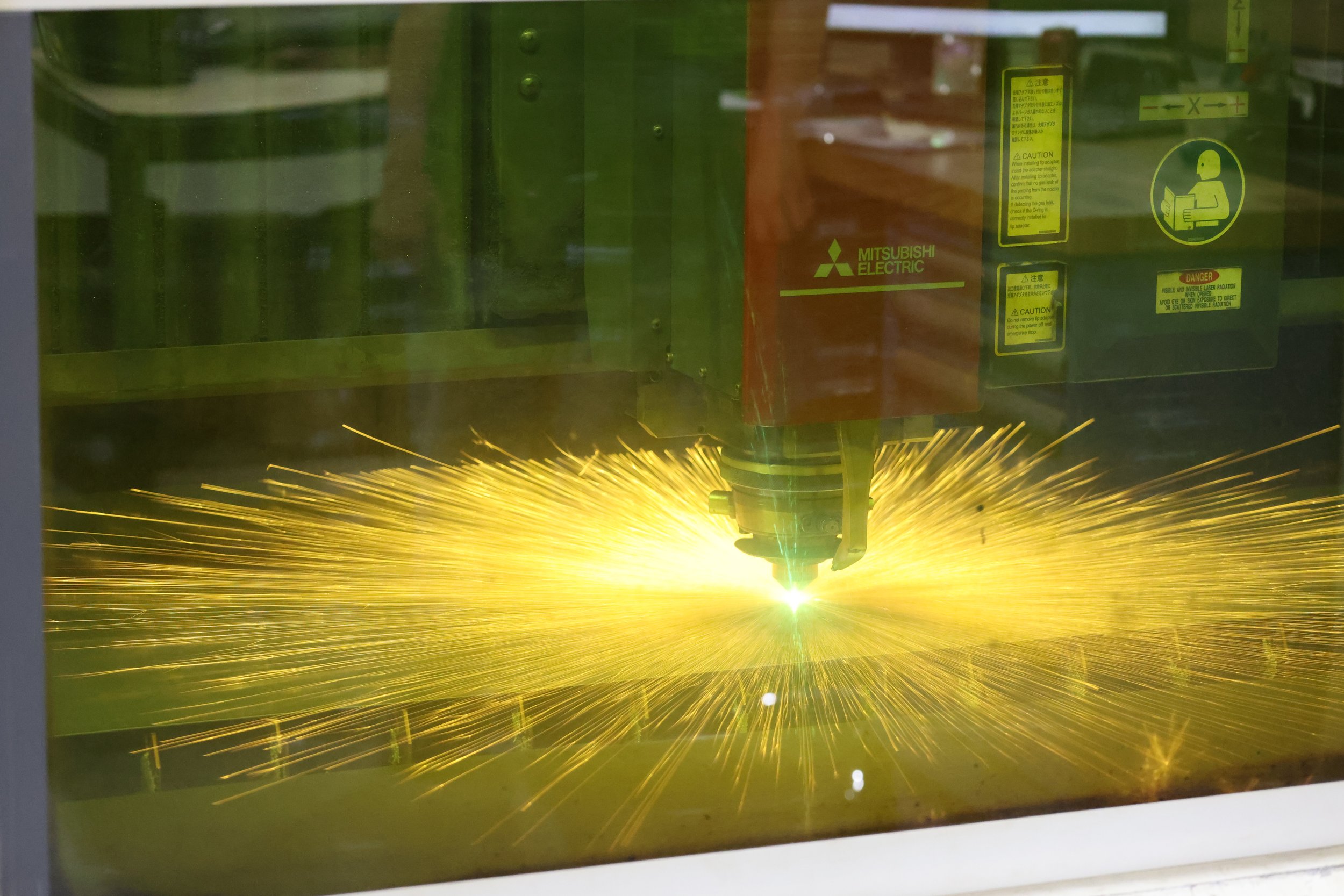
Machines don't have off days or develop bad habits. One of the most significant drivers of our consistency is our investment in Flexible Manufacturing Systems (FMS).
By utilizing automated material towers and synchronized laser cutting, we remove the variability of manual material handling. When a program is validated and loaded into our system, the machine executes it with mathematical precision every single time. By automating the boring parts of fabrication, like loading raw sheets and cycling scrap, we allow our engineers to focus on the high-level process controls that keep your tolerances stable over long-term production runs.
Controlled Tooling Strategy
Consistency fails when a shop uses whatever tool is closest. A subtle change in a bend radius or a slightly worn punch can cause a part to drift out of spec, leading to assembly issues downstream.
We treat tooling as a strategic asset. HPM employs a controlled tooling strategy in which tool life is monitored, and selection is dictated by the engineering plan, not the operator’s preference. By aligning our design for manufacturability (DFM) feedback with our physical tool library, we make sure the geometry we promise on the print is exactly what is delivered at the press brake.
In-Process Checks vs. End-of-Line Inspection

A common manufacturing mistake is trying to inspect a part's quality at the very end of the line. If a defect occurred at the first laser cut and isn't caught until final packing, the entire batch is scrap.
We utilize a stage-gate approach to quality. This involves:
First Article Inspection Reports (FAIR): Checking the first part of every run is perfect before production continues.
In-Process Verification: Our operators perform scheduled checks at each station (cutting, bending, and hardware insertion) using calibrated measuring equipment to detect deviations in real time.
Data-Driven Adjustments: We monitor process capability (Cpk) to check our machines are operating well within their specified limits, identifying potential drift before it ever hits a tolerance boundary.
Disciplined Change Management
Most consistency issues arise when a shop makes a small tweak to a process without documenting it. Perhaps they changed a bend sequence to save five seconds, but that change accidentally interfered with a secondary hardware insertion.
We treat every change with discipline. Our change management process ensures that any adjustment to a validated process is reviewed by our engineering team, updated in the Standardized Work Instructions, and communicated across all shifts. This level of rigor is why we have maintained our ISO 9001:2015 certification through dozens of audits without a single major nonconformance.
The Peace of Mind of a System
In an industry currently navigating labor shortages and high turnover, the only way to protect your supply chain is to work with a partner that builds quality into the architecture of its business.
Our goal is to make the hero operator unnecessary by making the standard process foolproof with the reliability of an engineered system.
Ready for a fabrication partner that values engineering over guesswork? Contact an HPM engineer today to discuss how we can bring system-level consistency to your next project.
